Don't miss our Offers - up to 50% OFF!

Crochet Hobo Bag: 5 Essential Checks for a Beautiful Fit
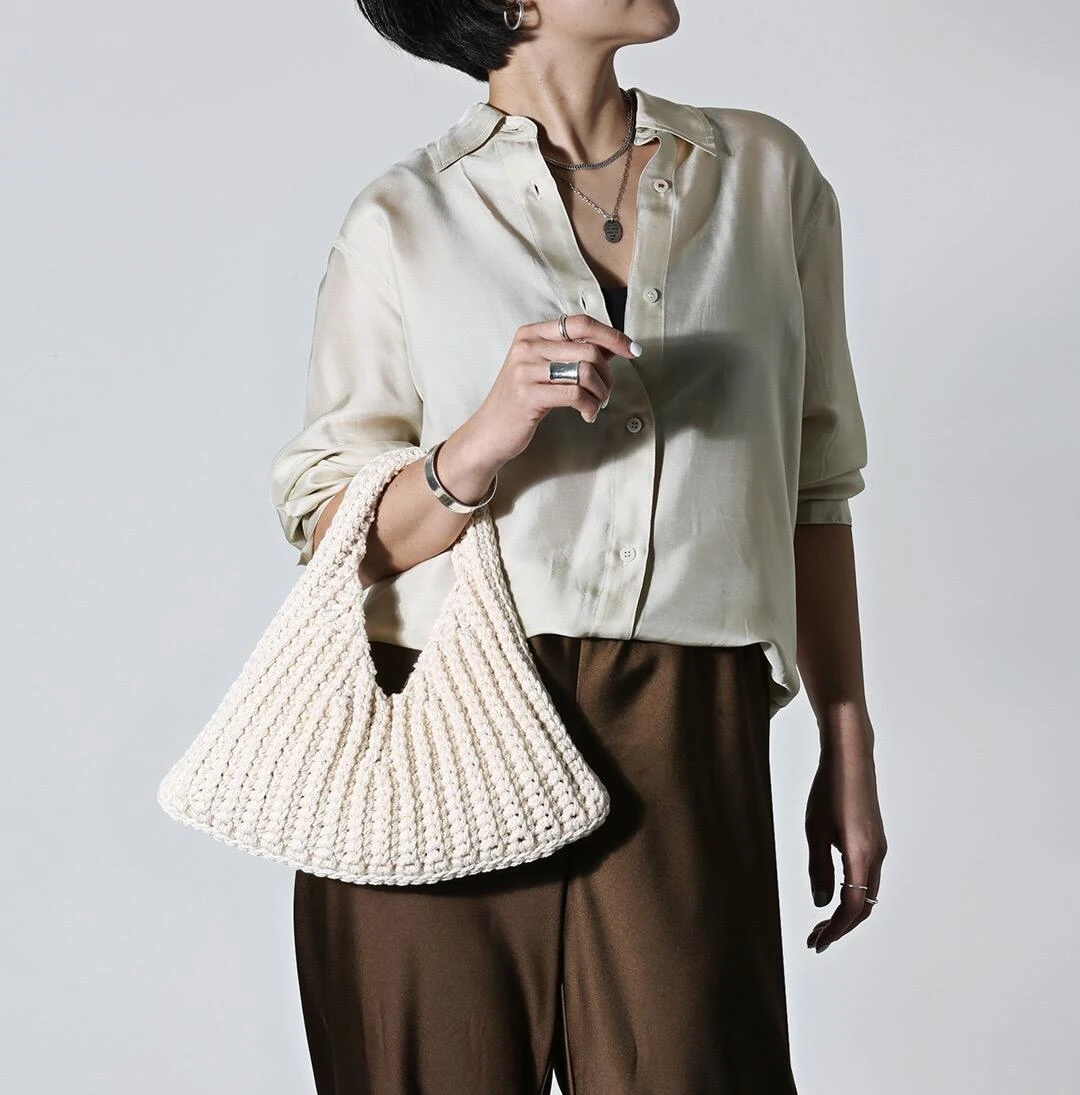
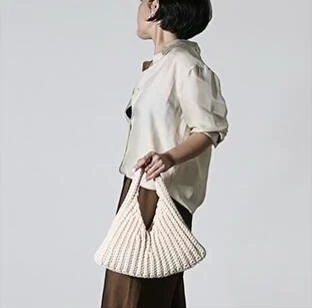
A crochet hobo bag gets its curve from the short rows and its V-shaped opening from the eleven-chain bridge. Use these five checks to catch uneven ribs, a shifted seam or a tight handle while there’s still time to adjust.
1. Test the Fabric Before You Commit
A crochet hobo bag can have beautiful ribs and still feel too soft once you lift it. Start with a short swatch. Use the cotton you plan to buy, work several back-loop rows, and hold the sample from one corner. See how much the stitches stretch under their own weight. Try another hook if the ribs spread too easily or the fabric turns stiff.
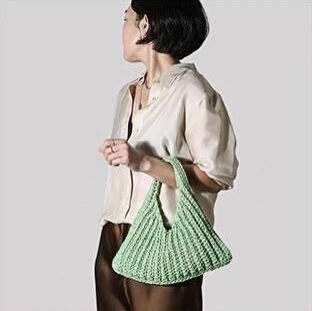
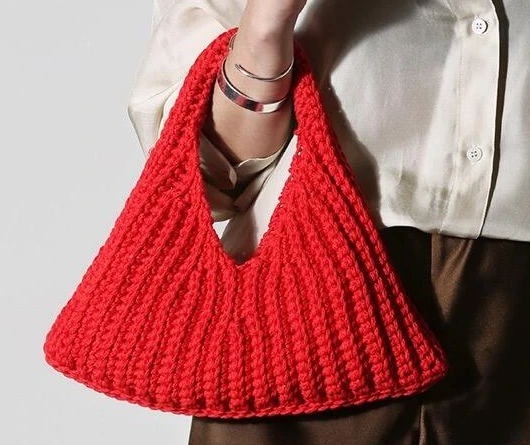
The guide shows six-ply cotton and gives Natural Beige, Seed Green and Red as examples. It doesn’t specify gauge, hook size, yardage or a finished measurement. Your swatch is the reference for this project. Keep the same yarn and hook for the two panels, then use a tape to compare them before assembly.
Look at the swatch from both sides. Back-loop stitches create a line of unused front loops, which helps produce the ridges. If one stretch looks smooth, check that you haven’t worked through both loops. It’s easy to make that change accidentally when the fabric bends under your fingers.

As an Amazon Associate I earn from qualifying purchases. Product cards in this guide contain affiliate links.
If your swatch feels right with a 3.5 mm hook, this Clover Amour is one option. The pattern leaves the hook size to your yarn and tension.
Clover 1043/E Magenta Amour Crochet Hook, Size E, 3.5mm
View on Amazon2. Mark the Places Your Crochet Hobo Bag Revisits
The most helpful markers are the ones you can find again after turning the work over. Put a marker in the first and last sc of the foundation row. The chain has 35 stitches, and Row 1 works 35 sc into the back bumps after its turning chain. Row 2 uses the back loop only. The short rows that follow deliberately leave some stitches untouched.
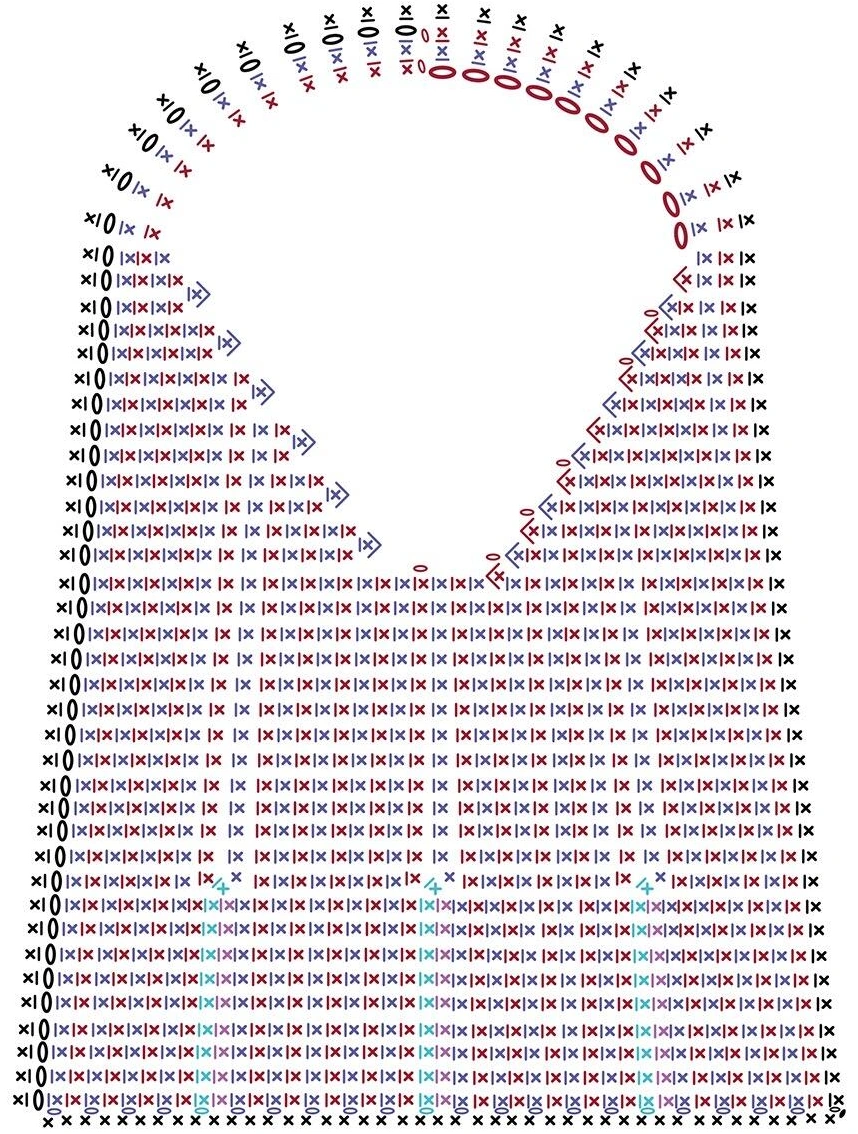
Notice how the chart separates passes with ink colors. A change in chart ink is a reading aid, so use the same yarn shade. Label your return points on the fabric or jot them on a piece of paper. When you reach a crossover, turn the crochet hobo bag panel so you can trace the ridge to its marked stitch before continuing.
Pause after Rows 7 and 13 to check the returns to earlier rows. Row 7 lands at Row 4 stitch 20 and Row 13 lands at Row 10 stitch 15. When one stitch looks too far away, check the number from the start of its row. Taking a shortcut across the gap can leave an opening that shows later.
| Row | Work | Stitches |
|---|---|---|
| 1 | ch 1, 35 sc into chain back bumps | 35 |
| 2 | ch 1, 35 sc | 35 |
| 3 | ch 1, 24 sc | 24 |
| 4 | sk 1, 23 sc | 23 |
| 5 | ch 1, 20 sc | 20 |
| 6 | sk 1, 19 sc | 19 |
| 7 | ch 1, 19 sc; R4 / st20: 2 sc, sc2tog | 22 |
| 8 | sk 1, 21 sc | 21 |
| 9 | ch 1, 19 sc, sc2tog | 20 |
| 10 | sk 1, 19 sc | 19 |
| 11 | ch 1, 15 sc | 15 |
| 12 | sk 1, 14 sc | 14 |
| 13 | ch 1, 14 sc; R10 / st15: 3 sc, sc2tog | 18 |
| 14 | sk 1, 17 sc | 17 |
| 15 | ch 1, 15 sc, sc2tog | 16 |
| 16 | sk 1, 15 sc | 15 |
A row counter is useful once you start returning to earlier rows. Mark the stitch position separately on the fabric.
Clover Knitting Stitch Counter Mini Kacha-Kacha
View on Amazon3. Check the Crochet Hobo Bag Row Counts at Each Turn
Two instructions look almost interchangeable when you’re in a hurry. A row beginning with ch 1 uses a turning chain that counts as zero. A row beginning with sk 1 starts with a skip, without an added chain. Mark the lines that begin with sk 1 on your working copy, especially if you often add the turning chain by habit.
Use the later crossovers as checkpoints. Row 19 ends with 15 stitches after continuing at Row 16 stitch 10. Row 25 ends at 19 after returning to Row 22 stitch 15. Row 31 ends at 23 after returning to Row 28 stitch 20. Put the crochet hobo bag panel down after each of those rows and check the fabric instead of judging the shape while the working yarn is under tension.
A counter can track the row number. Keep the stitch total beside it since the two numbers diverge quickly with short rows. If you work the second panel days later, start a new tally and compare the loose sections on both panels at the same row. This gives you a chance to fix a missing short row before the handle bridge closes the shape.
| Row | Work | Stitches |
|---|---|---|
| 17 | ch 1, 10 sc | 10 |
| 18 | sk 1, 9 sc | 9 |
| 19 | ch 1, 9 sc; R16 / st10: 6 sc | 15 |
| 20 | ch 1, inc, 14 sc | 16 |
| 21 | ch 1, 15 sc, inc | 17 |
| 22 | ch 1, inc, 16 sc | 18 |
| 23 | ch 1, 15 sc | 15 |
| 24 | ch 1, 14 sc | 14 |
| 25 | ch 1, 14 sc; R22 / st15: 3 sc, inc | 19 |
| 26 | ch 1, inc, 18 sc | 20 |
| 27 | ch 1, 19 sc, inc | 21 |
| 28 | ch 1, inc, 20 sc | 22 |
| 29 | ch 1, 20 sc | 20 |
| 30 | sk 1, 19 sc | 19 |
| 31 | ch 1, 19 sc; R28 / st20: 2 sc, inc | 23 |
4. Fit the Crochet Hobo Bag Handle Before Seaming
Cut the yarn after Row 31. The next bridge starts with a separate loop and 11 chains. Anchor at stitch 23 of Row 31, make an increase and work 22 sc. Row 32 has 24 sc plus the bridge chains, so the next two rows should have 35 stitches each. If your count is 24 at Row 33, check whether you included the chain extension.
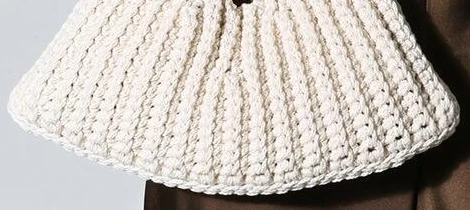
Set the two panels one over the other once you’ve finished their outer edge rows. On Row 35, the 35 sc across the row continue into 35 sc along a single back strand of the foundation chain and 35 along the bottom before the slip stitch closes the round. As you work this edge, let the stitches sit beside each other without pulling the ribs sideways.
Put a clip at each end of the handle opening and see whether both openings line up. If one bridge looks shorter, compare its counting and tension before seaming. The optional tool here is a hook with a comfortable grip. Use whichever hook gives you an edge that can bend without drawing the opening smaller.
| Row | Work | Stitches |
|---|---|---|
| 32 | R31 / st23: inc, 22 sc; turn | 24 |
| 33–34 | ch 1, 35 sc; turn | 35 |
| 35 | Ch 1, 35 sc. Work 35 sc through a single back strand of the Row 1 foundation chain, then 35 sc along the bottom edge. Join with sl st in the first stitch. | — |

An ergonomic handle may be more comfortable while you work the longer edge rows. Check the included sizes against your swatch.
Prym Ergonomic Crochet Hook Set with Rubber Handles, 5 Pack (E, G, 7, H, J)
View on Amazon5. Check the Crochet Hobo Bag Seam With the Bag Hanging
On the second panel, keep the yarn attached after Row 35. Place the wrong sides together. Use the outer chain loops of both panels to slip stitch their outer edges together. Mark the bottom center and work toward each marker with even tension. If the bottom shifts, stop and line up the corresponding loops instead of stretching one panel.
Finish the inner handle on each side separately. There are eleven stitches per section, and you work through both loops for this edging. This keeps the inner edge from rolling outward. Count both sets before weaving in the ends. Check the handle with the crochet hobo bag hanging empty, then open the body and look for any loose loops left at the bottom or sides.
Use the wash directions on the yarn label. A change in fiber or finish can change how the ribs behave after washing. For your next version, note the hook you used and record the dimensions of the empty bag so you have a useful reference for choosing another cotton.

Frequently Asked Questions
Why is a gap growing at a short-row transition?
Check that you’re working into the exact earlier row and stitch given. Compare the chart and count the full row at the crossover.
Why does my crochet hobo bag handle pull inward?
Compare the eleven-chain bridge on each panel and check whether the final inner slip stitches are too tight.
How many stitches do I finish inside the crochet hobo bag handle?
There are two sections of eleven stitches. Use slip stitches through both loops on each section.
Can I add a lining to the crochet hobo bag?
A lining is optional and is outside the supplied instructions. If adding one, measure the finished body with the handle opening relaxed first.
Why are my crochet hobo bag panels different sizes?
Check the hook, tension and row counts. Compare the return points and the 11-chain bridges before seaming.
Before you put your crochet hobo bag to use, check the bottom seam and hold the bag by both sides of the handle. The panels should sit evenly and the opening should flex easily.